
Window Condensation in New Jersey: Humidity, Failed Seals or a Water Problem?
Start with the decision, not the sales pitch
Window performance depends on the product ratings and the installation. Condensation, drafts and comfort concerns should be separated before replacement decisions are made.


Use this comparison before you decide
| Decision point | What to review | Question to ask |
|---|---|---|
| Symptom location | Interior, between glass and exterior condensation suggest different issues | Where and when does the moisture appear? |
| Product ratings | U factor and solar heat gain should fit the climate and goals | What NFRC ratings appear on the label? |
| Opening condition | Sizing, flashing and surrounding materials affect installation | What opening preparation and finish work are included? |
| Claimed savings | Actual results depend on the home and usage | What documented basis supports any savings claim? |
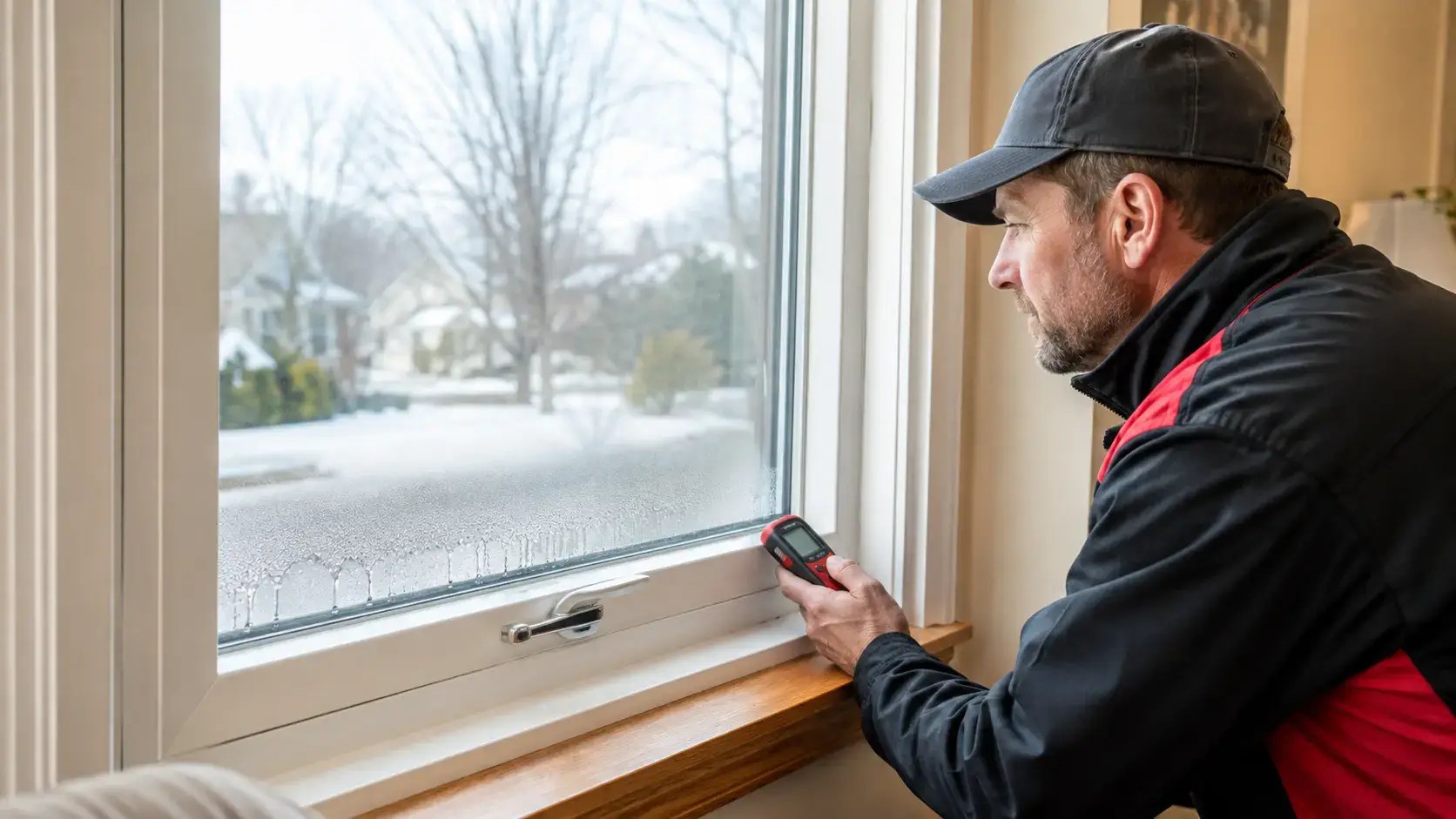
A foggy window can describe four different conditions. Moisture may form on the room side of the glass, appear on the exterior surface, collect between sealed panes or show up as staining around the frame after rain. Those locations point to different causes and different next steps.
New Jersey winters make the question especially common. Warm indoor air contains moisture, while window glass can become cold enough for that moisture to condense. Summer air conditioning can reverse the temperature relationship. Meanwhile, a failed insulated glass seal or an exterior flashing problem can create fogging or water that is not solved by changing indoor humidity.
The safest starting point is observation, not a quick diagnosis. Record where the moisture appears, when it happens and whether it follows weather, bathing, cooking or another indoor activity.
First identify which surface is wet
Stand inside and check the glass carefully without opening trim or attempting repairs. The moisture may be:
- On the room side surface, where it can be wiped away indoors
- On the exterior surface, where it clears as outdoor conditions change
- Between panes, where it cannot be reached from either side
- Around the frame, sill, wall or trim rather than on the glass
That one distinction makes the conversation with a window professional much more useful. Photographs taken at the time of the event are valuable because condensation can disappear before an appointment.
Room side condensation usually relates to temperature and humidity
Condensation forms when humid air contacts a surface below its dew point. ENERGY STAR explains that interior condensation can occur when the inside glass temperature falls below that threshold. Even efficient windows can show moisture when indoor humidity is high enough relative to outdoor temperature.
Common contributors include cooking, showers, drying laundry indoors, unvented combustion, many occupants, humidifiers and recently completed construction. Closed blinds or heavy curtains can reduce warm room airflow across the glass and make a cold surface more noticeable.
Repeated water on frames or sills should not be ignored. It can damage finishes and contribute to biological growth. The goal is to reduce the moisture source and improve safe air movement while determining whether the window itself has performance or installation concerns.
Safe steps for interior window condensation
Homeowners can begin by:
- Using bathroom and kitchen exhaust fans that vent outdoors
- Checking the home’s indoor relative humidity with a reliable meter
- Reducing humidifier settings during very cold weather
- Opening blinds enough for room air to reach the glass
- Wiping standing water from frames and sills
- Confirming clothes dryers and combustion equipment vent correctly
- Arranging professional help for persistent moisture or suspected mold
Do not block required ventilation or alter fuel burning equipment. If moisture is widespread across the home, the cause may extend beyond the windows and warrant evaluation by a qualified HVAC or building performance professional.
Exterior condensation can be a normal weather event
Moisture sometimes forms on the outdoor face of an efficient window, especially during clear, cool mornings with high outdoor humidity. The exterior pane can cool below the outdoor air’s dew point while the insulating glass limits heat transfer from indoors.
Exterior condensation should be confirmed from outside or by its response to changing sun and air temperature. It is not the same as moisture trapped inside the glass unit. If the exterior surface clears naturally and there is no related wall damage, replacement may not be necessary for that symptom alone.
Condensation between panes points to the glass unit
Double and triple pane windows use a sealed insulating glass unit. If the perimeter seal no longer maintains that space, moisture can appear between panes. The fogging may come and go with temperature, but it cannot be wiped from either exposed surface.
Lawrence Berkeley National Laboratory notes in its window analysis documentation that condensation within sealed glazing can be a condition requiring replacement of the glazing unit. The appropriate remedy depends on the window design, age, parts availability, warranty and condition of the frame.
Some windows allow replacement of the insulated glass unit without replacing the full frame. Others may justify complete replacement because the sash, balances, frame or installation has also deteriorated. A professional assessment should separate a glass seal issue from a broader window opening problem.
Get a window assessment based on the actual moisture location
Donny’s Home Improvement can evaluate qualifying replacement window projects and explain whether the visible condition points toward glass, frame or installation concerns. Request a free estimate or call 973.333.6364.
Water around a window after rain is a different problem
Stains, soft trim, peeling paint or water at the sill after wind driven rain should not automatically be called condensation. The opening may have a problem with exterior flashing, sealant joints, siding, trim, wall drainage or the window itself.
Water can travel inside a wall before it becomes visible, so the wet spot is not always directly beside the entry point. Spraying a window with a hose without a controlled test can make the source harder to interpret and may cause additional damage.
Document the wind direction and timing, then arrange an exterior envelope inspection. Coordinating the window and siding scope is especially important because the transition between them must shed water. Donny’s siding service page supports combined exterior planning.
Frame condition changes the replacement decision
A fogged glass unit in an otherwise sound, serviceable window is different from fogging accompanied by rot, distorted vinyl, corroded hardware, failed balances or difficult operation. The assessor should inspect:
- Sash and frame condition
- Locks and operating hardware
- Interior and exterior trim
- Visible drainage openings
- Perimeter air and water seals
- Adjacent siding and flashing
- Evidence of repeated leakage
- Existing window type and installation method
A new glass unit may address lost clarity, but it will not correct a damaged frame or improper opening detail.
Drafts are related but not identical
Cold air near a window can be caused by air leakage, but it can also result from natural air movement as room air cools against glass. A hand held sensation alone does not prove a failed seal.
Professional diagnostic methods can distinguish air leakage from surface temperature effects. Weatherstripping, sash adjustment or perimeter sealing may help in some cases. Other windows are at the end of their service life or perform poorly enough that replacement becomes the more complete solution.
Avoid applying sealant over weep paths or moving components. Those openings may be part of the designed drainage system.
Replacement windows should be evaluated as a complete assembly
If replacement is appropriate, compare more than frame material and glass count. ENERGY STAR certification and National Fenestration Rating Council labels provide standardized performance information. Climate zone, U factor, solar heat gain coefficient and air leakage all affect selection.
Installation is equally important. The opening should be measured, prepared, integrated with the weather resistant barrier where accessible, insulated and sealed according to the selected method. Trim should not be used to conceal an unresolved water path.
Ask whether the quote is for insert replacement, full frame replacement or another method. Each approach changes how much of the existing frame and exterior transition can be inspected.
What to document before the appointment
Create a simple record for each affected window:
- Room and window location
- Interior, exterior or between pane moisture
- Date, time and outdoor temperature
- Recent cooking, bathing or humidifier use
- Whether the event followed rain or wind
- Any odor, staining, soft material or peeling finish
- Window operation and visible damage
- Photographs from inside and outside
That information helps prevent a temporary symptom from being misclassified after it has dried.
Questions to ask a window contractor
Ask the estimator to explain:
- Where the moisture is located
- Whether the glass unit, sash, frame or opening is affected
- Which conditions can be corrected without full replacement
- Whether insert or full frame installation is proposed
- How exterior water management will be integrated
- Who handles siding or trim repairs
- Which performance ratings apply to the selected window
- What glass, parts and installation warranties cover
- How the interior and exterior will be finished
- How unforeseen wall damage will be documented and priced
The proposal should never promise that new windows will cure every humidity or comfort issue. Results depend on the home, existing conditions, equipment and occupant moisture loads.
Match the solution to the moisture location
Interior condensation may call for humidity and airflow changes. Exterior condensation can be a temporary weather event. Between pane fogging points toward the insulating glass unit. Water around the frame after rain needs an exterior water management investigation.
That distinction protects homeowners from replacing windows for the wrong reason while making true failures easier to address. Explore Donny’s replacement window services, then request a free estimate or call 973.333.6364 for a New Jersey consultation.
Frequently Asked Questions
1. Why do my windows have condensation inside during winter?
Warm indoor air carries moisture. When it contacts glass below the air’s dew point, water can form on the room side. Cold outdoor weather, higher indoor humidity and restricted airflow behind blinds can make it more visible. Use exhaust fans, monitor humidity and wipe standing water. Persistent whole home moisture may require an HVAC or building performance assessment beyond the window itself.
2. Does interior condensation mean my windows are bad?
Not necessarily. ENERGY STAR notes that even efficient windows can experience interior condensation when the glass is below the indoor dew point. Window performance, outdoor temperature and indoor humidity all interact. A failing frame or air leak can contribute, but the moisture location alone does not prove replacement is required. Document patterns and have recurring conditions assessed before choosing a remedy.
3. Why is there condensation on the outside of my windows?
Exterior condensation can develop when the outdoor glass surface cools below the outside air’s dew point. It often appears on clear humid mornings and disappears as sunlight or air temperature rises. Insulating glass can make the exterior pane remain cooler because less indoor heat reaches it. Confirm the moisture is truly outside and watch whether it clears before assuming the window has failed.
4. What causes fog between double pane glass?
Fog between panes usually indicates that moisture has entered the sealed insulating glass space. The seal may no longer be maintaining the dry environment intended by the unit. Because the moisture is inaccessible, cleaning exposed glass will not remove it. A professional can determine whether the insulated glass unit alone can be replaced or whether the sash, frame and installation condition support full replacement.
5. Can only the glass be replaced in a foggy window?
Sometimes. Serviceable frames and available replacement parts may allow a new insulating glass unit or sash. The decision depends on manufacturer, age, construction, warranty, frame condition and labor. Glass replacement restores clarity and insulating space but cannot repair rot, warped frames, failed hardware or exterior flashing. Compare the complete scope and warranty of repair versus full replacement.
6. Is water on the sill after rain condensation?
It may be rain entry rather than condensation, especially when the event follows a particular wind direction or appears with stains and soft trim. Water can enter through window, flashing, siding or wall details and travel before becoming visible. Photograph the condition, avoid uncontrolled hose testing and arrange an exterior envelope inspection. Repeated wetting should be addressed promptly to limit damage.
7. Should I lower indoor humidity in winter?
Lowering excessive humidity can reduce condensation, but the appropriate level depends on outdoor temperature, building construction, comfort and health needs. Use a reliable humidity meter and adjust humidifiers gradually. Operate kitchen and bathroom exhaust fans that vent outdoors. Do not create extremely dry conditions or alter combustion equipment. An HVAC professional can help when moisture remains high throughout the home.
8. Can window condensation cause mold?
Repeated moisture can wet dust, wood, paint, drywall and other materials that support biological growth. Wipe standing water and correct the moisture source. EPA guidance emphasizes moisture control as the key to limiting mold. Large, recurring or hidden affected areas should be evaluated by qualified professionals. Window replacement alone will not solve a separate indoor humidity or wall leakage problem.
9. What is the difference between insert and full frame replacement?
Insert replacement generally places a new unit within portions of the existing frame, while full frame work removes more of the old assembly and exposes more of the opening. The exact methods vary by product and house. Full frame replacement can offer better access to damaged or poorly detailed areas, but it also changes trim and exterior work. The proposal should name the method clearly.
10. What should a replacement window estimate include?
It should identify window type, dimensions, frame material, glass package, performance ratings, color, screens, operating hardware, installation method, insulation, air and water sealing, trim, disposal and warranty. It should explain how concealed damage is priced and who handles siding or interior repairs. Product labels and written scope make competing estimates easier to compare than a single total alone.
Frequently asked questions
What should a homeowner verify after reading “Window Condensation in New Jersey: Humidity, Failed Seals or a Water Problem”?
Separate the symptom from the solution, then compare product ratings, opening preparation, installation details and written claims.
Does condensation always mean a failed window?
No. The location and timing of condensation matter. Indoor humidity, exterior conditions and failed insulated glass seals are different issues.
Which ratings help compare windows?
ENERGY STAR and NFRC labels provide standardized information such as U factor and solar heat gain coefficient.
Can exact energy savings be promised without property data?
No. Actual results depend on the home, existing windows, climate, installation, equipment and occupant behavior.
Sources used for fact checking
- ENERGY STAR residential windows, doors and skylights
- ENERGY STAR independent performance testing
- Department of Energy product guidance
Manufacturer documents, lending disclosures, municipal information and insurance requirements can change. Confirm the current document that applies to the actual property, product and agreement.
Continue your research
Request a free roofing or exterior estimate
Send the full property address and project details. Donny’s Home Improvement will review the request, confirm service availability and contact you about scheduling.
Request My Free EstimateCall 973 333 6364